How to Make a Talking AI Influencer for Reels
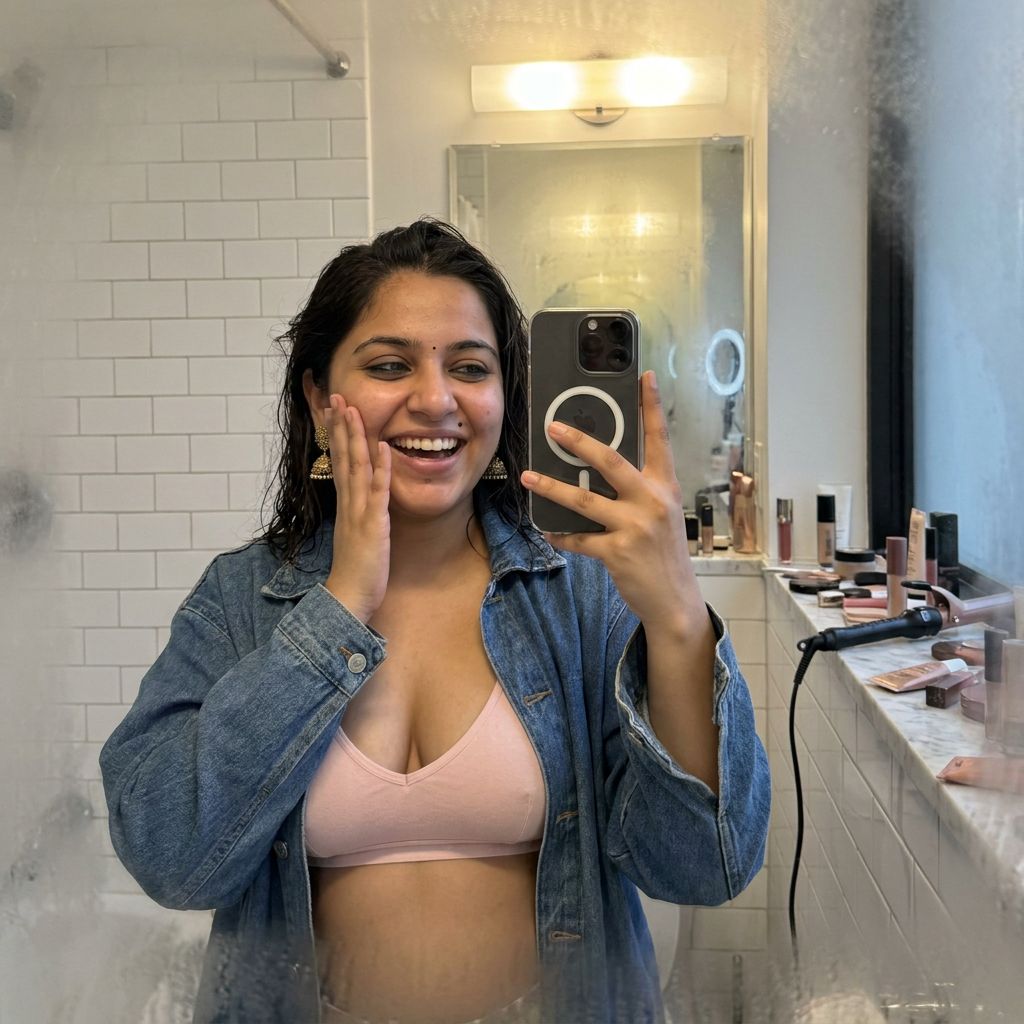
A photo of an AI influencer gets a double-tap. A talking AI influencer — one that looks at the camera, opens its mouth, and actually says something in Hinglish — gets saved, shared, and remembered. That gap between a pretty static face and a face that speaks is where most short-form growth happens on Reels.
The good news: you no longer need a studio, a ring light, or even a real person. You need a consistent AI face, a tight script, a believable voice, and clean lip-sync. This guide walks through each piece, the two main approaches that actually work today, and a repeatable workflow you can run every week. It's written for Indian creators making talking-head explainers, GRWM voiceovers, and product talks — so the examples are in the language your audience actually scrolls in.
The four pieces of a talking AI influencer
Every talking Reel is really four things stacked on top of each other. Get any one wrong and the whole thing reads as "fake AI." Get all four right and most viewers won't think about it at all.
- A consistent face. The same person across every video. This is the single biggest trust factor. If your influencer's nose, jawline, or skin tone shifts between Reels, the channel never feels like a real creator.
- A script. 15–30 seconds of spoken words. Tight, conversational, with a hook in the first line.
- A voice. The audio that delivers the script — accent, pace, and tone. This is what makes or breaks "relatability" for an Indian audience.
- Lip-sync. The mouth movements matched to the audio so the face actually looks like it's saying those words.
Think of it as face + script + voice + lip-sync. The rest of this post is about producing each one well and stitching them together.
Two approaches that actually work
There are two practical paths to a talking Reel today. Pick based on the tools you have and the control you want.
Approach 1: Native audio-video models
Some newer video models generate the visuals and the speech together from a single prompt. You describe the persona and the line, and the model outputs a clip where the character is already talking, lip-sync baked in.
- Pros: Fastest. One step. The lip-sync tends to be tightly coupled to the visuals because the model planned both.
- Cons: Less control over the exact voice and accent. Hinglish pronunciation can wobble. Harder to keep the same face across many clips unless you anchor on a reference image.
This is great for quick, one-off talking moments where you don't need the voice to be pixel-perfect.
Approach 2: Generate visual, then lip-sync with TTS, then stitch original audio
This is the workhorse method and gives you the most control. You break the job into clean stages:
- Generate the visual — a short clip (or a still you animate) of your consistent influencer, mouth neutral, looking at camera.
- Generate the voice with TTS — produce the spoken audio separately using a text-to-speech voice you've chosen for accent and tone, or record a real voice if you have one.
- Lip-sync — feed the visual and the audio into a lip-sync model so the mouth matches the words.
- Stitch — bring the synced video and your final audio track together in an editor, add captions, b-roll, and music.
Because each stage is separate, you can swap the voice without re-rendering the face, fix one bad line without redoing the whole Reel, and reuse the same base clip for multiple scripts. For a channel posting weekly, that modularity is worth the extra steps.
Writing a tight 15–30 second talking script
Most "AI influencer" Reels fail at the script, not the tech. A talking-head clip has no room for warm-up. You have one line to earn the next eight seconds.
Use this structure:
- Hook (0–3s): A question, a claim, or a "stop scrolling" line. No "hi guys."
- Value (3–20s): One idea. Not three. One.
- Payoff + CTA (20–30s): The takeaway and what to do next (follow, comment, link).
A few rules that hold up:
- Write for the ear, not the eye. Read it out loud. If you stumble, rewrite it.
- One sentence per breath. Short clauses lip-sync more cleanly than long winding ones.
- Front-load the keyword. People decide in the first 1.5 seconds.
- Aim for roughly 40–75 words for a 15–30s clip, depending on pace.
Example script: a GRWM voiceover (Hinglish)
Hook: "Office ke liye 5-minute makeup? Bilkul possible hai."
Value: "Pehle ek tinted moisturizer — no foundation drama. Phir cream blush, cheeks pe bhi, lips pe bhi. Ek coat mascara, aur brows ko bas brush kar lo."
Payoff + CTA: "Done. Looks like you tried, took only 5 minutes. Save karo, kal try karna — aur batao kaunsa step skip karte ho."
Example script: a product talk (Hinglish)
HOOK (0-3s):
"Yeh ₹299 wala serum mere skincare ka MVP ban gaya hai."

VALUE (3-22s):
"Vitamin C hai, but bina us chipchipe feel ke.
Subah ek pump, moisturizer se pehle.
Do hafte mein dullness gaya, aur dark spots halke hue.
Sensitive skin? Patch test zaroor karna."

CTA (22-30s):
"Link bio mein hai. Try karke mujhe tag karna —
main repost karungi apni story pe."
Notice both scripts are one idea, conversational, and switch naturally between Hindi and English the way people actually talk. That code-switch is exactly what makes a Desi AI influencer feel local instead of dubbed.
If you want to go deeper on writing for spoken AI clips, we cover it in AI Reels with audio in Hinglish.
Getting natural voice and accent
Voice is where Indian creators win or lose. A flat, neutral-American TTS voice reading Hinglish lines is instantly uncanny. Aim for these:
- Right accent, right region. Pick a voice that matches the persona — a Delhi-coded voice and a Bengaluru-coded voice land differently. Test a few; trust your ear.
- Hinglish handling. Make sure the voice pronounces Hindi words inside English sentences correctly. Some TTS engines mangle "chipchipe" or "halke." If yours does, spell tricky words phonetically or break the line.
- Pace and pauses. Real people pause. Add commas and line breaks where you'd naturally breathe. Slightly slower than you think is usually right for Reels.
- Energy match. A GRWM voiceover is warm and casual. A product talk can be a touch more confident. Match the tone to the format.
If you have a real voice you like — yours or a collaborator's — recording it and lip-syncing to it (Approach 2) almost always beats TTS for relatability. The face is AI; the voice doesn't have to be.
Keeping the face consistent
This is the part people underestimate. A consistent face is what turns a pile of clips into a creator. To keep it locked:
- Anchor on one reference. Use the same source image or persona as the visual seed for every clip. Don't re-roll the face each time.
- Hold the framing. Same rough distance, same eye-level camera, same lighting mood. Wild changes in angle make the AI re-interpret the face.
- Lock the details. Same hairstyle, same skin tone, same signature features (a mole, glasses, a nose ring). Write these into your prompt every single time.
- Keep a style sheet. Save the exact prompt and reference you used. Reuse it. Consistency is a checklist, not luck.
Persona-first tools make this much easier because the influencer is defined once and reused. On DesiCMO pricing you'll see plans built around exactly this — a saved persona you generate talking Reels from, instead of starting from scratch each post.
A repeatable weekly workflow
Here's the loop you can run every week without reinventing anything:
- Pick the format. Explainer, GRWM voiceover, or product talk. One per Reel.
- Write the script. Use the hook → value → payoff structure. Keep it 40–75 words. Read it aloud.
- Generate or pull your persona clip. Same face, same framing as always. Mouth neutral, looking at camera.
- Produce the voice. TTS with the right accent, or record a real voice. Check Hinglish pronunciation.
- Lip-sync. Match the audio to the face.
- Stitch and finish. Add burned-in captions (most Reels are watched on mute first), light music, and any b-roll or product cutaways.
- Ship and learn. Post, watch retention on the first 3 seconds, and adjust next week's hook.
For the platform-specific basics — sizing, captions, posting cadence — pair this with our guide on how to create AI Reels in India.
An honest word on quality limits
Talking AI video in 2026 is genuinely good, but it isn't perfect, and pretending otherwise burns trust. Be aware of where it still cracks:
- Lip-sync drifts on long lines. Tight, short sentences sync cleaner. This is why script discipline matters.
- Hinglish pronunciation can slip. Always listen back before posting. One mangled word can break the illusion.
- Faces can wander over many clips. Anchor hard on a reference and audit consistency every few posts.
- Big head movements and side profiles are harder to sync than a steady, near-frontal talking pose. Keep early Reels simple.
The practical takeaway: keep clips short, scripts tight, framing steady, and always do a final watch-and-listen pass. Done that way, most viewers won't clock it as AI at all — they'll just remember the creator.
You can put the whole loop together — persona, script, voice, lip-sync — and try it free on DesiCMO before committing to anything. Start with one talking Reel this week and see how it lands.
FAQ
How long should a talking AI influencer Reel be?
For Reels, 15–30 seconds is the sweet spot for talking-head content. That's roughly 40–75 spoken words. Lead with a 1.5-second hook, deliver one idea, and close with a clear CTA. Longer talking clips lose retention and make lip-sync harder to keep clean.
Do I need a real voice, or is TTS enough?
TTS works well and is faster, especially with a voice that handles Hinglish and matches your persona's region. That said, recording a real voice and lip-syncing to it usually feels more relatable. The face can be AI even when the voice is human — many creators mix both.
How do I keep the AI influencer's face the same across Reels?
Anchor every clip on one reference image or saved persona, hold the same framing and lighting, and write the same signature features into your prompt each time. Keep a style sheet of the exact prompt you used. Persona-first tools handle this for you so the face stays locked.
Which approach is better — native audio-video or separate lip-sync?
Native audio-video models are fastest for one-off talking moments. The generate-visual-then-lip-sync-with-TTS-and-stitch approach gives more control over voice, accent, and consistency, and lets you fix one line without redoing the whole Reel. For a weekly channel, the separate-stage method is usually worth the extra steps.
Ready to spin up your own Desi AI influencer?
Pick a base still, lock the identity, and ship your first Reel this evening.
Open DesiCMO Studio →