AI Influencers for Amazon & Meesho Sellers in India
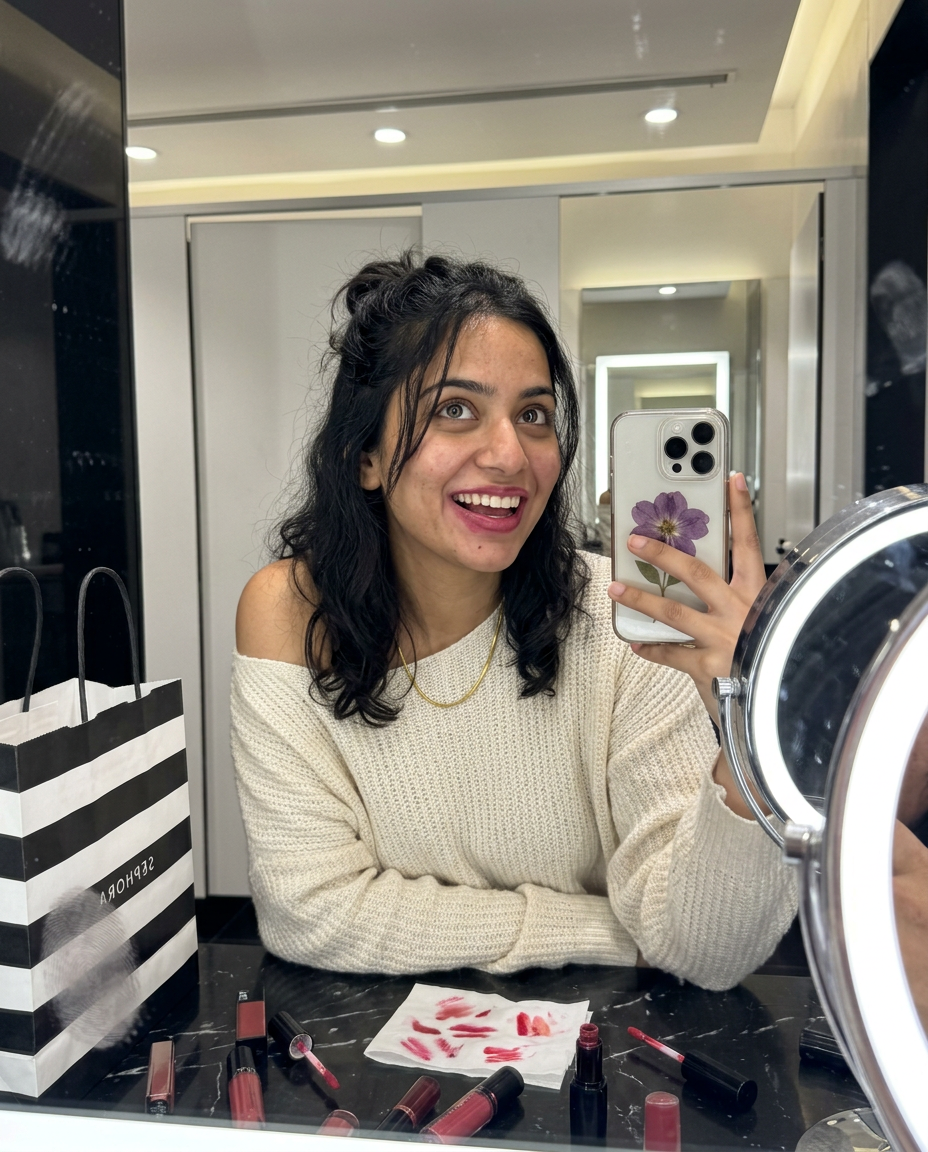
If you sell on Amazon, Meesho, Flipkart or your own D2C site in India, you already know the real bottleneck isn't sourcing products — it's content. Every SKU needs a clean catalog shot, a lifestyle image that makes someone want it, and increasingly a 15-second Reel for ads and your storefront. Multiply that across 40, 100, 300 listings and the maths gets ugly fast.
An AI influencer changes that maths. It's a consistent virtual persona — same face, same body, same vibe across every render — that can hold your product, use it, and demo it on camera. No model fees, no studio bookings, no reshoots. This guide breaks down exactly how Indian sellers are using AI influencers to produce product photos, lifestyle shots and UGC-style Reels at a fraction of the old cost.
The problem: content costs scale with your catalogue
A traditional product shoot in a metro like Mumbai, Delhi or Bengaluru runs roughly like this:
- Model: ₹8,000–₹25,000 per day for a decent face.
- Photographer + studio: ₹10,000–₹30,000 for the day.
- Makeup, styling, assistant: ₹5,000–₹10,000.
- Reshoots: a wrong shade, a creased label, a new variant — another half-day, another invoice.
Even if you batch ten products into one shoot, you've spent ₹40,000–₹70,000 before a single Reel is edited. And here's the killer for marketplace sellers: catalogues churn. A new colour, a festive bundle, a Diwali-edition pack — and the old shoot is useless. You're back to square one every season.
For a small seller doing ₹3–8 lakh a month, that content line item is brutal. Most just run grainy phone photos, which is exactly why their listings convert worse than the big brands on the same search page.
How an AI influencer solves it
An AI influencer is a locked persona. Once you've picked your face — say a relatable 24-year-old Mumbai girl or a 30-something dad-next-door — that exact person appears in every image and video you generate. That consistency is what makes it feel like a real creator, not a stock photo. Here's what that unlocks for a seller:
- A persona holding or using your product. Upload your product image, and the influencer is rendered holding your kurti, your kitchen jar, your phone stand — naturally, with correct hands and proportions.
- Unlimited variations from one product photo. Different outfits, backgrounds, expressions, angles, lighting. One SKU becomes 20 distinct creatives.
- Fast turnaround. A lifestyle image lands in seconds. A 15-second Reel in minutes. Compare that to a week of coordinating a shoot.
- No model release headaches. The persona isn't a real person, so there's no per-image licensing, no "can we reuse this", no follow-up fees.
If you want the mechanics of getting your actual product into the frame correctly, we wrote a full walkthrough on how to add products to AI influencer posts.
The core workflow: product photo to demo Reel
Most sellers run the same four-step loop. It's worth internalising because it scales to any category.
Step 1 — Clean product photo
Start with one decent, well-lit photo of your product on a plain background. A phone shot in daylight near a window is enough. This is the only "real" asset you need.
Step 2 — Influencer holding it
Generate your persona holding the product — wearing it for a fashion item, holding and looking at it for a gadget. This is your hero catalogue-plus shot, and it instantly outperforms a flat-lay because there's a human and a sense of scale.
Step 3 — Lifestyle scene
Place that same influencer-with-product into a context: the kurti at a rooftop chai spot, the kitchen organiser on a real Indian counter with dabba and masalas around, the phone stand on a study desk. Context is what triggers "I need this in my life."
Step 4 — 15-second demo Reel
Turn the lifestyle frame into a short UGC-style video. The influencer picks up the product, shows a feature, reacts. Add a Hinglish hook caption — "Ye ₹399 wala organiser meri puri kitchen sort kar diya" — and you've got an ad-ready Reel for Meesho, Instagram and your Amazon Brand Store.
That's one product, one source photo, four assets — and you never left your desk.
Use cases by category
Fashion
The highest-leverage category. AI influencers can model your kurti sets, co-ords, sarees and accessories across different body framings and backgrounds. Generate a Diwali-styled shot, a casual daytime look and a date-night version of the same outfit — three angles, three moods, zero extra cost. For Meesho resellers especially, having a real-feeling face wearing the product beats the supplier's flat catalogue image every time.
Beauty
Show the persona applying or holding your serum, kajal, lip tint or haircare. Skin-tone-accurate Desi personas matter enormously here — a fair-skin Western stock model selling an Indian-skin foundation shade is a trust-killer. A relatable Indian face holding your bottle, with a clean "before going out" lifestyle scene, converts.
Kitchen & home
Containers, organisers, appliances, cookware. The win is context. A masala dabba set photographed alone is boring; the same set on a real-looking Indian kitchen counter with the influencer reaching for it tells a story. Demo Reels here are gold — show the organiser being filled, the lid snapping shut, the "before/after" clutter transformation.
Gadgets & accessories
Phone stands, earphones, chargers, smartwatches, ring lights. Show the influencer actually using it — wearing the watch, clipping the stand to a desk, plugging in the charger. Function-in-use shots reduce returns because the buyer understands exactly what they're getting and how big it is.
Cost comparison vs traditional shoots
Let's put real numbers on a seller producing content for 20 SKUs in a month.
Traditional route:
- Two shoot days (model + photographer + studio + styling): ₹80,000–₹1,20,000.
- Editing and retouching: ₹15,000–₹25,000.
- Reshoots for variants: add ₹30,000+.
- Realistic monthly total: ₹1,00,000–₹1,50,000.
AI influencer route with DesiCMO:
- One subscription covers photos and Reels across all 20 SKUs.
- Marginal cost per extra creative: effectively negligible.
- Variants, festive editions, new angles: just regenerate.
- Monthly total: a fraction of one shoot day — see DesiCMO pricing for plans.
The gap isn't 20% or 30%. For a high-SKU marketplace seller it's an order of magnitude, and it widens the more you list. This is the same economic shift D2C brands are riding — we covered seven of them in how Indian D2C brands use AI influencers.
It's also worth understanding why AI UGC behaves differently from hiring micro-creators for every product — the trade-offs are laid out in AI UGC vs traditional UGC in India.
Compliance and disclosure
Two things to keep clean, because marketplaces and ad platforms care.
Product accuracy. Your generated images must represent the actual product honestly. Don't let the AI invent a feature, change the real colour, or imply a size the buyer won't receive — that's a returns and rating problem, and on Amazon it can get a listing suppressed. Always start from a true product photo and check the render matches what ships.
AI disclosure. As of 2026, the sensible practice in India is to label AI-generated promotional content, especially on Instagram and Meta ads where synthetic-media disclosure is increasingly expected. A simple "Created with an AI model" note in the caption or a corner label keeps you on the right side of platform policy and ASCI-style transparency norms. It rarely hurts conversion — buyers care that the product is real, not that the model is.
Getting started
You don't need to commit to a paid plan to see whether this works for your catalogue. DesiCMO lets you spin up one AI influencer free — pick a persona, upload one product photo, and generate your first holding shot, lifestyle scene and demo Reel. Run it on your worst-performing listing and watch what a real face and a proper lifestyle context do to your click-through. If it moves the needle on one SKU, the maths across your whole catalogue makes itself.
FAQ
Can the AI influencer hold my exact product?
Yes. You upload a clean photo of your actual product and the persona is rendered holding or using that specific item, with correct hands and scale. It works best when your source photo is well-lit on a plain background. The full process is in our add products guide.
Is this allowed on Amazon and Meesho listings?
Using AI-generated lifestyle and model images is fine as long as they honestly represent the product — same colour, same features, same size. Marketplaces object to misleading imagery, not to the tool used to make it. Keep your main catalogue image accurate and use AI shots for the secondary lifestyle and A+ slots.
Do I need design or video skills?
No. The workflow is upload-and-generate: pick a persona, add your product, and the system produces the photos and short Reels. Editing is optional — most sellers just add a Hinglish caption and post.
How many products can one AI influencer cover?
One persona can front your entire catalogue. Using the same face across all your listings actually helps — it builds a recognisable brand identity, the way a real spokesmodel would, while costing you nothing extra per product.
Ready to spin up your own Desi AI influencer?
Pick a base still, lock the identity, and ship your first Reel this evening.
Open DesiCMO Studio →
