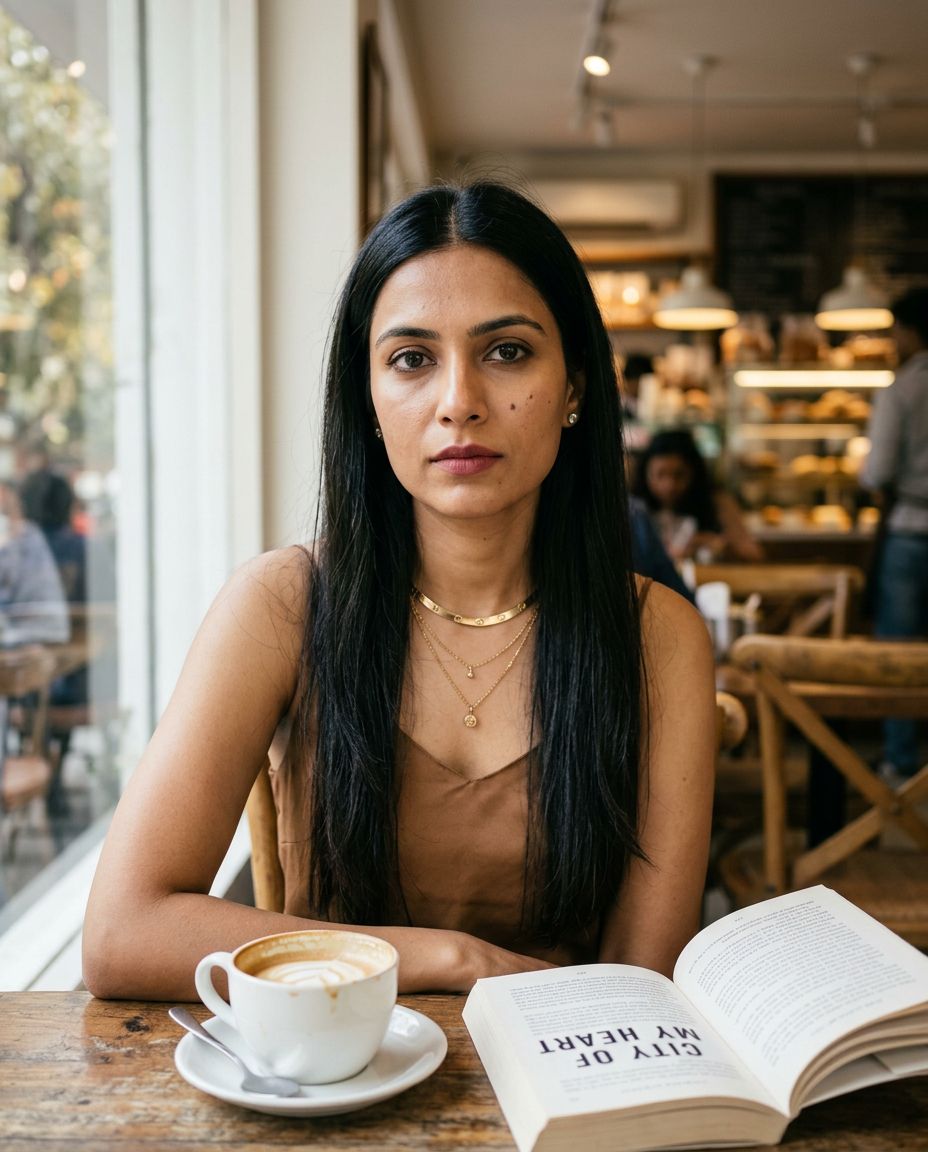
How to Keep Your AI Influencer's Face Consistent Across Every Post
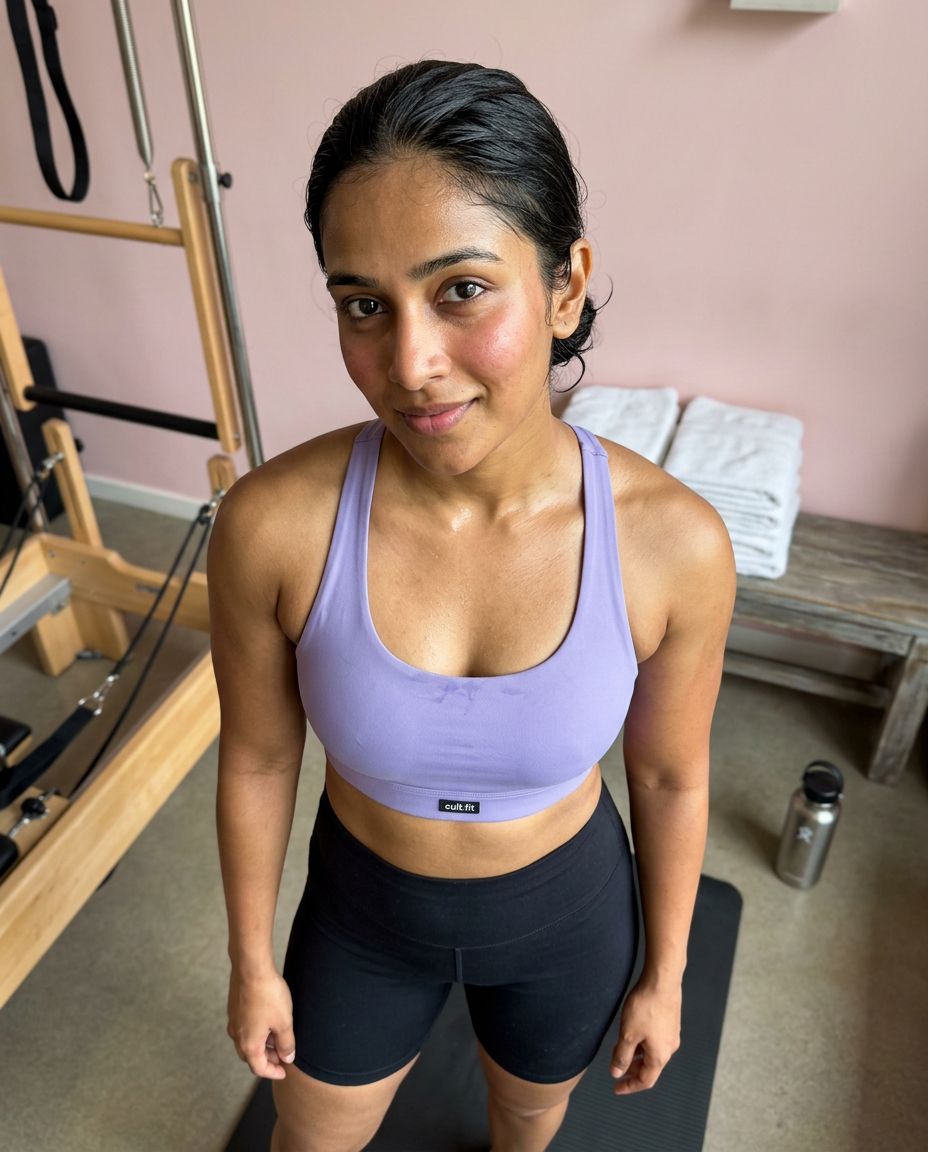
TL;DR: AI influencer face consistency is the single hardest problem in virtual creator content — most tools generate a slightly different face every time, which quietly breaks the illusion that your influencer is one real person. The fix is identity locking: anchoring every image and reel to one reference face, controlled with seeds, a trained persona, and disciplined prompts. DesiCMO does this natively with Identity Lock, so the same face shows up across every post automatically.
Why AI influencer face consistency is the real challenge
Most people assume the hard part of building an AI influencer is making one good-looking photo. It isn't. Generating one stunning image of a fictional Indian creator takes about ten seconds in any modern tool. The hard part — the part that separates a believable influencer from a folder of pretty but unrelated faces — is AI influencer face consistency: getting the same face to appear, recognisably, across hundreds of posts, reels, lighting setups, outfits and moods.
This matters because influence is built on recognition. Followers don't bond with "an AI account." They bond with a specific person they recognise in their feed — the eyes, the jawline, the smile they have seen fifty times. The moment the face shifts between posts, the brain registers "that's a different woman," and the parasocial connection that drives follows, saves and trust quietly collapses.
For Indian and Desi-diaspora creators, the stakes are higher still. Subtle features — skin tone, facial structure, the specifics that make a face read as authentically South Asian — are exactly the things generic Western-trained models drift on most. So consistency isn't a nice-to-have. It's the whole product.
What actually breaks face consistency
If you have ever tried building an influencer with a general-purpose image tool, you have seen the drift. Understanding why it happens tells you how to stop it.
Random generation with no anchor
Every text-to-image model has an element of randomness baked in. Type "young Indian woman, fitness creator, gym" five times and you get five different women — each plausible, none the same. Without something forcing the model back to one identity, "an Indian woman" is a category, not a person. The model has no reason to reproduce the exact same face twice.
No memory between generations
Most tools are stateless. They don't know that yesterday's image and today's image are supposed to be the same influencer. Each prompt starts from zero. So even small prompt changes — "smiling" vs "laughing," "studio" vs "outdoor" — nudge the output toward a subtly new face.
Prompt-only descriptions are too loose
People try to fix drift by describing the face in words: "oval face, brown eyes, sharp jaw, wheatish skin." But language is low-resolution. A thousand different faces fit that description. Words can steer the vibe; they cannot pin the exact geometry that makes a face recognisable.
Pose, angle and lighting amplify drift
A 3/4 angle, a dramatic side light, a wide-angle selfie distortion — each pushes the model to "reinterpret" features it can't see clearly, and reinterpretation means change. This is why a face often looks consistent in head-on studio shots but falls apart in a candid reel frame.
Five methods to lock one face across every post
Here are the proven techniques, roughly from least to most reliable. Strong setups stack several of them.
1. Reference / identity locking (the foundation)
The single most effective method is conditioning every generation on a fixed reference face. Instead of asking the model to invent a face from words, you give it an actual image to anchor to — the model now reproduces that face, adapting pose, outfit and scene around it. This is the backbone of real consistency, and it is what DesiCMO's Identity Lock automates. Everything below is an accelerant on top of it.
2. Seed control
A "seed" is the random number that determines a generation's starting noise. Reuse the same seed with the same model and prompt, and you get a near-identical result; change it and you get a fresh roll of the dice. Locking a seed across a batch keeps faces tightly aligned. The limitation: seeds alone are brittle — change the prompt much and the face still wanders. Treat seed control as a stabiliser, not the whole solution.
3. A trained persona
The most robust approach is to train the model on your character — feeding it a consistent set of images so the identity becomes something the model genuinely "knows," not something it guesses at each time. A trained persona holds up across wild changes in pose, lighting and styling because the identity lives inside the model itself. This is what makes a face survive a close-up product shot and a full-body dance reel.
4. Prompt discipline
Keep a fixed, reusable "identity block" at the top of every prompt — the same wording for face, skin tone and core features every single time — and only vary the scene, outfit and mood below it. Consistency in your inputs produces consistency in your outputs. Resist the urge to rewrite the face description creatively each post; that's how drift sneaks back in.
5. Consistency across formats, not just photos
Real influencers post photos and video. Your face has to survive the jump from a still to a moving reel frame, where motion blur and frame-to-frame variation introduce new drift. The only reliable way to keep photos and reels matching is to anchor both to the same locked identity — which is exactly the test a serious tool has to pass.
How DesiCMO solves face consistency natively
DesiCMO was built around this one problem. Identity Lock is the core feature, not an add-on: when you create a persona, the face you lock in becomes the anchor for every future generation — every photoreal image, every Hinglish or English reel, automatically.
You don't manage seeds, juggle reference uploads per post, or paste an identity block into a prompt by hand. The persona carries its identity with it. Generate a festive-season photoshoot, a gym reel, a café candid and a product close-up — and it is recognisably the same creator across all of them, with skin tone and South Asian features held true rather than drifting toward a generic default.
Because reels and images both draw from the same locked persona, your photo feed and your video content actually look like one person — the consistency that lets followers form the recognition loop real influence depends on. From there, DesiCMO auto-posts to Instagram and YouTube, so the consistent identity ships on schedule without manual exporting.
If you want the deeper technical picture, see our breakdown of how identity lock works. And if your goal is broader believability — not just a consistent face but a convincingly real one — pair this with how to make an AI influencer look real.
A practical workflow that holds up
Here is the order of operations we recommend, whether you use DesiCMO or assemble it yourself:
- Lock one strong reference face first. A clean, front-facing, well-lit, unfiltered base image is your identity anchor. Everything inherits from it — a weak anchor caps your ceiling.
- Reuse a fixed identity description on every prompt; vary only scene, outfit and emotion.
- Keep your batches anchored — same persona, same reference — rather than regenerating the face from scratch each time.
- Spot-check across formats. Put a close-up next to a full-body shot next to a reel frame. If it's the same person in all three, your consistency is real.
- Regenerate, don't redescribe, on drift. If one image wanders, a fresh render from the same anchor usually corrects it — rewriting the face in words often makes it worse.
Done right, your audience never thinks about any of this. They just see a creator they recognise, post after post — which is the entire point.
Frequently Asked Questions
Why does my AI influencer's face keep changing between posts?
Because most tools generate from scratch each time with no memory of previous outputs. Without a fixed reference face or a trained persona anchoring every generation, the model treats "your influencer" as a loose description rather than one specific person — so it produces a slightly new face every time. Identity locking is what stops the drift.
Is seed control enough to keep an AI face consistent?
Seeds help, but they are not enough on their own. Reusing a seed keeps faces aligned only while the prompt and model stay nearly identical; change the scene or styling much and the face still wanders. Seeds are best used as a stabiliser on top of a reference lock or trained persona, not as the primary consistency method.
How does DesiCMO keep the same face across photos and reels?
DesiCMO's Identity Lock anchors both image and video generation to the same persona you create at setup. Whether the system is producing a photoreal still or a Hinglish reel, it conditions on that one locked identity — so your photo feed and your video content read as the same person, with Indian features and skin tone held consistent.
Can I get consistent Indian or Desi features specifically?
Yes — and that is exactly what DesiCMO is built for. Generic models often drift away from authentic South Asian features toward a generic default. DesiCMO locks skin tone, facial structure and features as part of the persona, so your creator stays recognisably Desi across every post rather than slowly "Westernising" over a content run.
Ready to build a creator whose face never drifts? Lock one identity and let it carry across every photo and reel — see DesiCMO pricing, with plans from $49/mo Starter to $154/mo Creator, and start your consistent AI influencer today.
Ready to spin up your own Desi AI influencer?
Pick a base still, lock the identity, and ship your first Reel this evening.
Open DesiCMO Studio →